


Frequent Questions
Got a question? Hang on, maybe we got an answer for you right here!

| ESTIMATED COST: $7,950 USD |
Unique program which includes assessment preparation and interview coaching
All you need to know about the program goals, and why this program is right for you.
Read about us, our training strategies and our mission statement >>>
This program is designed and available only to Aerocadet's graduates from either our Full Professional Pilot Programs in the United States ("FPAP-US"), or European Union ("FPAP-EU") or Canada ("FPAP-C").
The aviation industry continues to face a significant global pilot shortage. While some national carriers prefer to hire only pilots who are citizens of the country where the airline is based (that goes to most U.S. airlines), many other airlines actively recruit from a wide range of international backgrounds and aviation experiences to meet their operational needs.
Countries with rapidly expanding aviation sectors often cannot produce enough locally trained pilots to keep up with fleet growth and pilot retirements. This situation has created excellent opportunities for qualified foreign pilots.
Some of the world’s most prestigious airlines are well-known for hiring pilots from diverse nationalities. The leading examples include Emirates, Qatar Airways, Etihad Airways (hiring non-type rated pilots thought flyDubai junior FO program), and Cathay Pacific, Singapore Airlines (hiring non-type rated pilots through the Second Officer program). These carriers offer competitive tax-free packages, modern fleets, and truly global career opportunities.
Beyond these major names, many smaller and mid-sized airlines also hire foreign pilots. These operators often fly regional, leisure, or cargo routes and can serve as more accessible entry points for pilots building international experience. What these airlines typically look for is an unrestricted ATPL issued by a respected aviation authority such as the United States, the European Union, Canada, or other highly developed ICAO member states. A strong, verifiable ATPL from one of these authorities significantly improves a pilot’s chances of securing employment abroad.
Training organizations, like Aerocadet, specialize in preparing pilots for this global job market. Their programs are designed from zero experience and equip graduates with the qualifications and credentials needed to apply successfully to both major international carriers and smaller operators that welcome foreign pilots.
In today’s pilot market, having the right license, high-quality training, and professional guidance makes all the difference in turning a flying passion into a truly international career.
One of the biggest challenges facing newly graduated commercial pilots is a long-standing obstacle in the aviation industry: the need for jet experience to secure employment, while needing that same jet employment to gain the required experience. This classic “catch-22” situation has discouraged and even ended many promising aviation careers before they truly begin.
For low-hour pilots fresh out of flight school, the lack of turbine or jet time often makes them less competitive for positions at major airlines. Without an entry point, building the necessary flight hours on jets can feel nearly impossible.
Fortunately, there is a practical pathway forward. Many airlines worldwide are willing to hire pilots who possess strong non-jet experience — particularly significant time on turboprops — combined with a full, unrestricted ATPL issued by a respected aviation authority such as the FAA, EASA, or Transport Canada.
These airlines, often regional or mid-sized carriers, serve as excellent transition employers. They provide new pilots with their first opportunity to fly jets in a professional airline environment. Once pilots accumulate this critical jet time, they become far more marketable and can successfully apply to larger airlines that typically require previous jet experience.
In today’s global pilot market, identifying and securing these stepping-stone positions is one of the most important steps in early career development. With the right qualifications and strategic career planning, new pilots can break through the experience barrier and build a successful long-term aviation career.
Below we have compiled a list of some of the airlines that have traditionally hired foreign pilots with only propeller flight time - such airlines serve either as an excellent stepping stone to build the initial jet flight time and progress to the larger world-class carriers, or can be an excellent career destination with the leading work conditions, benefits and pay.
| Airline Name | Location | Popular Pathway To | Foreign Requirements |
|---|---|---|---|
| FlyDubai | UAE | Emirates, Qatar, Etihad | CPL, 220 hours prop |
| Cathay Pacific | Hong Kong | Self | ATPL, 1500 hours prop |
| Singapore Airlines | Singapore | Self | ATPL, 1500 hours prop |
| Air Hong Kong | Hong Kong | Cathay Pacific | ATPL, 1500 hours prop |
| Copa Airlines | Panama | Emirates, Qatar, Etihad | CPL, 1000 hours prop |
| Bermuda Airlines | Bermuda | Emirates, Qatar, Etihad | ATPL, 1500 hours prop |
| Winair Airlines | Sint Maarten | Emirates, Qatar, Etihad | CPL 1000 hours prop |
| InterCaribbean Airlines | Turks & Caicos |
Emirates, Qatar, Etihad | CPL, 750 hours prop |
| Liat Air | Antigua | Emirates, Qatar, Etihad | ATPL, 1500 hours prop |
Skytrans |
Australia | Various airlines in Australia | ATPL, 1500 hours prop |
| Air Niugini | PNG | Emirates, Qatar, Etihad | ATPL, 1500 hours prop |
| Fiji Airways | Fiji | Emirates, Qatar, Etihad | ATPL, 1500 hours prop |
| Air Macau | Macau | Cathay, Emirates, Qatar, etc | ATPL, 1500 hours prop |
| HK Express | Hong Kong | Cathay, Singapore, Emirates, etc | ATPL, 1500 hours prop |
| Mandarin Airlines | Taiwan | Cathay, Singapore, Emirates, etc | ATPL, 1500 hours prop |
Susi Air |
Indonesia | Cathay, Singapore, Emirates, etc | CPL, 250 hours prop |
| Precision Air | Tanzania | Cathay, Singapore, Emirates, etc | ATPL, 1500 hours prop |
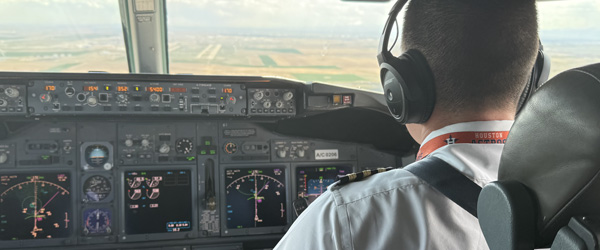
Our assessment prep program provides Aerocadet candidates with thorough, multi-session preparation course to ensure that they pass the B737 or A320 simulator assessment, technical interviews and HR panel interviews.
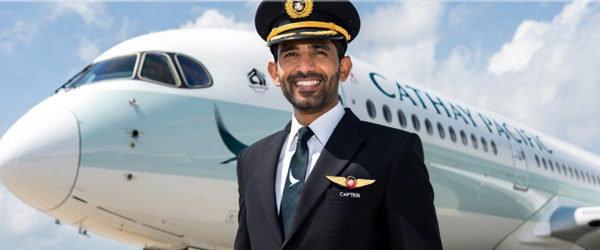
Through the network of simulator partners, Aerocadet optimizes your employment application to ensure expedited assessment and interview process, with a high success rate placement assistance with Cathay, SIngapore, Flydubai.
The advantages are many. The benefits are immense. The pricing is surprising. We give you the opportunity - you take the rest!
The absolutely fastest way to get through the Second Officer application process with Hong Kong, SI Singapore or UAE's leading airline!
This program is structured in such a way that every segment leads our applicants success.
| # | Course Stages | Duration | Location |
|---|---|---|---|
| 1 | Enrollment and application review | 2 days | Online |
| 2 | Online CBT Assessment Prep | 4 weeks | Online |
| 3 | B737 or A320 Sim Assessment preparation | 2 days | Czech Republic |
| 4 | Employment assessment and interview | 3 days | Local |
More details about the program and its phases:
The enrollment process is 100% online and is completed through the Aerocadet website and the airline’s official employment application portal. Pilots must first complete the Aerocadet enrollment form and select the airline of your choice Pathway Program from the available options. During this stage, applicants are required to upload their passport, pilot licenses, proof of funding, and complete the flight time declaration form.
After submitting the Aerocadet enrollment, pilots are advised to register on the airline’s career portal and then submit an application for the airline of your choice Second Officer or Cadet Pilot vacancy.
When submitting the airline application, candidates will need to upload a detailed CV, logbook summary, license copies, and a breakdown of their flight hours. Minimum requirements typically include a valid CPL/IR, ATPL theory passes or equivalent, ICAO English Level 4 or higher, and relevant flight experience, often 250 or more total hours, with strong preference given to candidates with 1,500 or more hours and a full, unrestricted ATPL. All applications are screened for basic eligibility before candidates are invited to the next stage of the selection process.
Shortlisted candidates are invited to a 25 to 30 minute video interview, usually via Microsoft Teams, with an HR representative. This stage is non-technical and relaxed. Typical questions focus on the candidate’s personal aviation background and career history, motivation for joining the airline of your choice including knowledge of the airline’s history, fleet, routes, recent news and culture, motivation for relocating to the airline’s home base such as living costs, preferred areas, family considerations and cultural adaptation, as well as availability, notice period and willingness to start as Second Officer in a cruise-relief role. Interviewers are described as friendly and polite. No heavy technical probing occurs at this stage. Feedback or progression to the next stage usually comes within days to a few weeks.
You can also expect to complete an online psychological/personality assessments and basic aptitude tests either before or after the video interview (see Raven progressive matrices tests)
Shortlisted candidates are invited to a 25 to 30 minute video interview, usually via Microsoft Teams, with an HR representative. This stage is non-technical and relaxed. Typical questions focus on the candidate’s personal aviation background and career history, motivation for joining the airline of your choice including knowledge of the airline’s history, fleet, routes, recent news and culture, motivation for relocating to the airline’s home base such as living costs, preferred areas, family considerations and cultural adaptation, as well as availability, notice period and willingness to start as Second Officer in a cruise-relief role. Interviewers are described as friendly and polite. No heavy technical probing occurs at this stage. Feedback or progression to the next stage usually comes within days to a few weeks.
The toycak jet sim assessment preparation for an airline will be conducted by instructors familiar with airline's assessment profile and standards, and would normally include the following prep hours:
• 4 hours PF (Pilot Flying) per student
• Additional experience in PM (Pilot Monitoring) role during paired crew operations
• Total practical exposure: 8 hours per student (PF + PM)
• Profiles modeled on airline selection assessments, including Cathay-style scenarios
• Includes typical airline entry-level procedures: airport profiles, approaches, go-arounds,
area maneuvers, and general handling
• Detailed methodology, techniques, and program structure remain FAIR’s proprietary
know-how.
The simulator assessment shares several common elements whether the candidate is assigned the Airbus A320 or the Boeing 737. Candidates are expected to follow standard company procedures and callouts provided in the briefing pack. There is a strong emphasis on precise flying, accurate altitude, heading, and speed control, as well as smooth aircraft handling. The airline maintains very high standards: pilots must remain on the centerline during takeoff and landing, fly exact assigned altitudes and tracks, and deliver stable ILS approaches.
On the Boeing 737, there are no auto-trim reminders, so manual trimming is required throughout the session. An engine failure or fire is usually briefed or introduced during the assessment. Overall, the simulator session evaluates adaptability, airmanship, CRM, workload management, and fundamental instrument flying skills.
The Airbus A320 profile is frequently used for recruitment. It typically begins with a standard takeoff, sometimes with a crosswind. This is followed by a climb straight ahead to an assigned altitude, level-off, and aircraft clean-up. The profile then includes radar vectors and heading changes, followed by a precisely flown downwind leg where altitude and track must be maintained accurately. After the base leg turn, candidates perform an ILS approach, either raw data or with guidance, followed by a go-around that often includes an engine failure at or shortly after initiation. The session continues with engine failure or fire handling and concludes with a visual circuit or a second approach to landing.
Key challenges on the A320 centre around its fly-by-wire characteristics, particularly if normal law reverts to alternate law during a failure. Pilots must demonstrate precise speed and altitude control on the downwind and base legs, along with smooth management of speedbrakes and flap selections.
The Boeing 737 profile follows a similar overall structure but is adapted to Boeing operating philosophy. It often starts with an engine failure at or shortly after V1, followed by climb, level-offs, and radar vectors. The downwind and base legs require strict track and altitude tracking. Candidates then fly an ILS approach, a go-around, engine failure or fire handling, and finish with a manual landing that may include additional failures.
On the B737, the main challenges include manual trimming throughout the flight, the heavier feel of Boeing flight characteristics compared to Airbus types, and the need for strict raw data flying and procedural accuracy. Instructors may also simulate Pilot Monitoring mistakes to test the candidate’s monitoring skills and CRM.
Recent candidates strongly recommend practising the exact profile provided in the briefing using a real full-flight A320 or B737 simulator. Focus heavily on precision — staying within ±100 feet, ±5 degrees of heading, and ±5 knots of speed. Use standard calls clearly and assertively, and remain calm throughout. Instructors are generally described as professional and supportive. If you have Airbus experience but are assigned the B737 (or vice versa), always fly according to the aircraft type’s philosophy, for example, trimming manually on the Boeing.
Although the profile itself is deliberately straightforward, it demands very tight tolerances and solid CRM. Most candidates who complete two to three proper practice sessions in the correct simulator type successfully pass this stage.
Typical manoeuvres include takeoff and initial climb, clean-up, turns and level-offs, ILS approach, go-around, engine failure or fire handling, and general handling with basic instrument flying. The assessment evaluates airmanship, handling of the specific aircraft type, workload management, and the ability to apply standard operating procedures under pressure.
The interview panel consists of a Captain for the technical portion and an HR representative for the behavioural questions. The interview typically lasts around 45 to 60 minutes and is divided roughly equally between technical and HR topics. It assesses how well candidates handle pressure and apply their knowledge in unfamiliar scenarios.
Common technical questions cover aircraft systems, procedures, aerodynamics, and scenario-based situations related to the simulator profile or general jet operations. Behavioural and HR questions usually explore motivation for joining the airline of your choice, knowledge of the airline and life at its home base, examples of teamwork, how candidates have handled challenges, and their long-term career goals.
Simultaneously or on the same day, a licence and documentation review is conducted. Candidates are required to bring their original logbooks, licences, passports, and medical certificates for verification.
This is conducted as part of the final assessment, sometimes on Day 2 or Day 3. It is a standard ICAO Level 4 or higher English proficiency test that focuses on aviation English in operational scenarios. Most experienced pilots pass without difficulty if their spoken English is already at a professional standard, however it is formally assessed during this stage.
A comprehensive Class 1 medical examination, which may include blood, urine, and in some cases hair tests, is arranged at the airline of your choice’s home base. It is usually scheduled after the interview and simulator stages or as the final hurdle. The medical is conducted at an approved facility and must meet the airline’s strict medical standards.
Please review - its important!
While we will make every effort to support your success throughout the Second Officer or First Officer application and selection process with the airline of your choice, it is important to understand that final selection cannot be guaranteed. Your performance during the official assessment at the airline’s home base — particularly in the full-flight simulator — as well as your results in the technical evaluations, panel interview, and aptitude assessments, will play a critical role in the airline’s decision.
The airline will also closely evaluate your progress and performance during the initial type rating, ground school, simulator training, and final line check. If your performance falls below the airline’s required standards at any stage, the airline reserves the right to withdraw the Conditional Job Offer.
To give you the best possible chance of success, our assessment preparation is delivered through Aerocadet’s specialist training partners. This dedicated program provides high-quality, airline-specific training carefully tailored to the airline of your choice’s current simulator profiles, procedures, and evaluation standards.
If you do not hold a pilot license, Aerocadet provides integrated flight training programs with internship
Aerocadet offers fully comprehensive flight training programs across the United States, Canada, and Europe, designed to equip future pilots with the skills, qualifications, and career pathways needed for long-term success in the aviation industry. Each program features high-quality flight instruction and rigorous academic coursework under the oversight of some of the world’s most respected and safety-focused aviation authorities, including the FAA, TCCA, and EASA. Graduates receive highly desirable Commercial Pilot Licenses and Flight Instructor Certificates, ensuring they are well-positioned for employment in competitive airline environments.
The airline of your choice, like most major airlines, publishes both minimum and preferred requirements for pilot positions. While the official minimum requirements are relatively accessible — an ICAO Commercial Pilot Licence (CPL) with Multi-Engine Instrument Rating (MEIR), passes in ATPL theory exams from the same licensing authority, and a minimum of 250 hours total flight time — the preferred qualifications are what will make you a truly competitive candidate and significantly increase your chances of being selected.
In practice, successful applicants typically hold a full ICAO ATPL (or CPL with unrestricted ATPL theory credits) issued by a reputable aviation authority from a developed country with strong oversight. They also bring at least 1,000–1,500 hours of total flight time, ideally gained through structured instructor or charter/multi-crew operations, along with excellent references from previous employers.
This is why Aerocadet integrates guaranteed flight instructor internship and hour-building up to 1500 hours with all our pro-pilot programs.
For applicants specifically interested in pursuing the airline of your choice Second Officer career pathway, we highly recommend enrolling in Aerocadet’s ab-initio flight training program in the United States or European Union, conducted under FAA or EASA certification. EASA is especially recommended, as EASA ATPL theoretical exams are well aligned with many major airlines’ requirements, allowing for a smoother license transition process and providing an ideal foundation for future employment.
| Program type | Duration | Cost (USD) |
|---|---|---|
| Pro-pilot program in the United States | 12 months | approx $78,000 |
| Pro-pilot program in Canada | 18-24 months | approx $88,000 |
| Pro-pilot program in Europe (recommended) | 18 months | approx $78,000 |
A separate program comparison page is available here for more information.
Flexible accommodation options and for any budget!
Accommodation options near the simulator centre in Romania (A320 sim) or Czech Republic (all other sims) will be arranged for candidates attending the assessment preparation phase. Visa support documentation will be provided if required.
Lets talk about your budget planning. We offer several solutions for student and pilot career development loans.
The total program cost includes assessment test preparation using online CBT (Computer-Based Training) software, together with 8 hours of full-motion Class-D simulator training. This consists of 4 hours of Pilot Flying (PF) assessment profile drills and 4 hours of Pilot Monitoring (PM) observations. The program also includes 2 hours of pre-flight briefings and 1 hour of post-flight debriefings.
| Course cost | $7,950 USD |
Air travel to EU and 3 days of accommodation near sim center.
We have a flexible payment schedule that does not require students to pre-pay for the program in advance.
| Upon admission and signing of the training agreement: | $7,950 USD |
Eligible applicants can receive student loans to cover up to 100% of their tuition and living expenses.
Our company can provide administrative support in the form of SLAS Package for students to obtain Student Loans from the respective banks and financial institutions in their own country of residence. Such support is offered by providing conditional employment offer letters and training bond contracts. Review the available financing options page here >>>
Please note: neither Aerocadet, no any other flight training organizations in the United States, Canada or EU provide 100% flight training sponsorships, grants or scholarships. Please read the student loan information located via the above link thoroughly before applying for enrollment.
It is easy to enroll!
To enroll into this program, an applicant must have the following documents:
| Pilot's License and ratings: |
|
||||||||||
| Flight time |
|
||||||||||
| Travel documents | You must hold a valid, unexpired international passport for international travel. All countries are acceptable. | ||||||||||
| Education | You must be a high school graduate, and must have a full a certificate of secondary education, such as "high school diploma" or "O-levels" or "GED" or equivalent certificates. | ||||||||||
| English knowledge certification | ICAO-4 or higher (not required for pilots from FAA or TCCA certification background) | ||||||||||
| Age |
|
When to apply?
The airlines operate on an irregular, needs-based schedule for Direct Entry Second Officer positions. There is no fixed annual recruitment cycle. Openings appear sporadically, typically every few months to once or twice a year, depending on fleet expansion and attrition rates.
Application windows usually open in batches and remain active for several weeks to a couple of months. Past applicants often report long waiting periods after submission. It is strongly recommended to monitor the airline’s official career portal on a regular basis, ideally daily, so you can submit your application as soon as a new window opens.
Sit back, relax, enjoy the flight: we are here to help you through this process!
If you need a personal consultation regarding the flight training program, please email one of our highly qualified consultants with a full list of your questions, and receive a structured response within 24 hours.
Take it home!
Don't think this program is for you? That's okay. We have several other program that might suit you better!
Got a question? Hang on, maybe we got an answer for you right here!
No, you do not. No major airline in the SE Asia require pilots to hold a degree. Just high school education is sufficient. More information about this topic is available on Aerocadet's blog page here >>>
No, you do not. If you hold an ICAO CPL with ICAO-4 English certificate, you will not need to take IELTS or TOEFL for admission into Pathway program.
Yes, and application for AHK or Cathay Cargo are done differently, as they are operating under separate air carrier certifications. The application process for Air Hong Kong is straightforward and starts with downloading and completing the official AHK Pilot Application Form from their website (airhongkong.com.hk). You then email the filled form along with your CV, copies of licences, medical certificate, logbook summary, passport, and a recent Certificate of No Criminal Conviction to recruitment@airhongkong.com.hk. Shortlisted candidates are typically invited to a technical quiz (around 20 ATPL-level questions), followed by HR and management pilot interviews, a simulator assessment (usually on Airbus or similar platform), and a final HKCAD Class 1 medical (including drug/alcohol screening). The entire process is conducted in Hong Kong. Applications remain on file for 12 months and are reviewed as positions become available. AHK accepts both HK Permanent Residents and non-HKPR pilots willing to relocate (subject to government approval). The assessment is done in a B747-200 sim.
Negative. Cathay Cargo does not have a fully separate recruitment process — pilots for Cathay Cargo (including B747-8F freighters) are hired through Cathay Pacific Airways’ main pilot recruitment portal, as outlined above. You apply online via the official Cathay Pacific careers site (careers.cathaypacific.com) for First Officer (Direct Entry) positions. No Second Officer positions are available.
Yes. Cathay will provide you with all the required visa support paperwork to apply for HK entry visa.
While we are committed to supporting your success during the Second Officer application process, final selection is not guaranteed. Your performance in the Boeing 777 or A330/350 simulator, aptitude tests, technical evaluations, and subsequent training phases—including the type rating and final check ride—will determine your eligibility. gulf airlines reserves the right to withdraw the Conditional Job Offer if standards are not met. To maximize your chances, Aerocadet provides airline-specific assessment preparation in the EU through expert training partners.
Yes, you can— but not immediately. You need to wait for at least 6 months to re-apply.
No, you do not. Cathay covers 100% of all license conversion, type rating and initial training cost. In addition, SO selectees are offered a generous starter bonus to cover accommodation and se-settling costs.
No. All the required computer based training (CBTs), including B777 or A330/350 systems are included in the program cost estimate.
Neither Aerocadet not Cathay provide food as part of its training services, as our student body is highly diverse, with individuals from various cultural and religious backgrounds, each with unique dietary needs and preferences. To respect these differences and ensure that every student can adhere to their personal dietary practices, we leave the responsibility of meals to the students themselves. This approach allows each student the flexibility to choose and prepare food that aligns with their individual health, cultural, or religious requirements.
No, you need to have all the required ratings. This is why all the professional ratings are included into all of the Aerocadet's professional pilot programs. If you did your training outside of our program and need the ratings - please speak to one of our consultants to discuss your options.
No, you need to have all the required flight time. This is why up to 1500 hours of actual flight time is included into all of the Aerocadet's professional pilot programs. If you did your training outside of our program and need the hours - please speak to one of our consultants to discuss your options.
Yes, but you will need at least 1,500 hours of total flight time and a full, unrestricted ATPL issued by a developed aviation authority to be both eligible and competitive for such employment opportunities. Many reputable airlines—including Singapore Airlines, flyDubai/Emirates, EVA Air, Copa Airlines, and others—are actively hiring international pilots who meet these qualifications. If you still need to obtain a full ATPL and build the required 1,500 hours, we encourage you to explore our career development program for ICAO CPL holders in the United States here >>>
We are here to help! Schedule your free personal consultation call here >>>