


Frequent Questions
Got a question? Hang on, maybe we got an answer for you right here!

| ESTIMATED BASE COST: $55,970 USD |
Convert any ICAO CPL to EASA ATPL with FI License Guaranteed Flight Instructor Internship Earn High Salary While Flying and Building Time
All you need to know about the program goals, and why this program is right for you.
Read about us, our training strategies and our mission statement >>>
Our CPL Conversion to EASA ATPL Program with Flight Instructor Internship in the European Union is designed specifically for pilots who already hold a Commercial Pilot License (CPL) and want to convert their credentials into a highly respected European EASA ATPL pathway while gaining legitimate flight experience and income.
| For pilots who already hold a CPL but wish to upgrade their credentials, rebuild their professional reputation under one of the world’s most respected aviation systems, and begin earning income while building flight time, this EASA ATPL conversion and instructor internship pathway represents one of the most practical and credible solutions available today! |
Many pilots from developing countries hold CPL licenses that, unfortunately, are often viewed with caution by major international airlines. This is largely because in some regions pilot licenses can be obtained through poorly regulated training environments, institutional pressure, or even corruption. As a result, airlines such as Emirates, Qatar Airways, Cathay Pacific, Singapore Airlines and other leading global carriers frequently prefer candidates whose licenses and flight time were obtained in strictly regulated aviation jurisdictions.
The European Union Aviation Safety Agency (EASA) is widely regarded as one of the most respected and rigorous aviation regulatory authorities in the world. Training and licensing under EASA standards provide airlines with the confidence that the pilot’s qualifications, examinations, and flight experience were obtained through transparent, merit-based training with strict oversight.
Our program allows foreign CPL holders to convert their existing licenses into the EASA system, complete the necessary ATPL theoretical training and ratings, and obtain EASA Flight Instructor (FI) certification. After graduation, students are eligible for a post-graduate work permit in the European Union, which allows them to work as certified flight instructors and build professional flight experience.
Through our partner flight training organizations, graduates can participate in a structured flight instructor internship, typically earning approximately $3,000 per month after tax, while building the initial flight hours required for airline employment. This phase allows pilots to transform a previously obtained CPL into credible, internationally respected flight experience, recorded under the EASA regulatory framework.
This pathway is particularly valuable because airlines do not hire pilots based solely on the number of flight hours listed in a logbook. They look for training pedigree, regulatory oversight, and real employment experience. A pilot who has worked as a certified flight instructor in the European system demonstrates that aviation authorities and employers have trusted that individual to operate aircraft safely and train other pilots—a powerful endorsement when applying to world-class airlines.
Upon completion of the instructor internship phase and the accumulation of sufficient flight time, graduates become significantly more competitive candidates for airline employment. Our company then provides comprehensive airline employment assistance, helping graduates pursue opportunities with airlines in Europe, the Middle East, Southeast Asia, and other international markets.
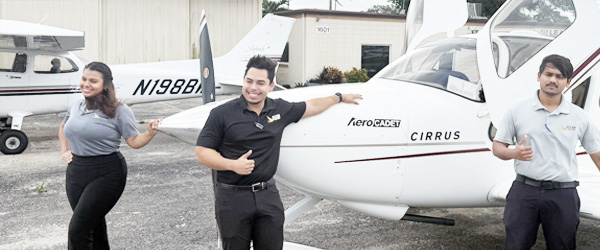
The program provides an opportunity to obtain a full, unrestricted EASA/ICAO Airline Transport Pilot License (ATPL), EASA Instructor Licenses, and accumulate 1,500+ hours of total aeronautical experience!
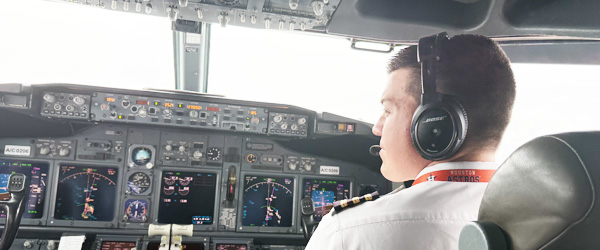
Obtaining one of the most respected and valuable airline pilot licenses in the world will elevate your professional profile and significantly improve your employability with leading international airlines, and EU airlines, if desired!
The advantages are many. The benefits are immense. The pricing is surprising. We give you the opportunity - you take the rest!
The absolutely fastest way to get from a basic CPL experience level to the full ATPL and a modern airline cockpit!
This program is structured in such a way that every segment leads our students to the ultimate goal: employment in the airlines. The program is divided into the following stages:
| # | Phase | Duration | Location |
|---|---|---|---|
| 1 | Enrollment | 2 weeks | World-wide |
| 2 | ICAO CPL to EASA PPL Conversion | 2 months | EU |
| 3 | EASA Instrument Rating | 2 months | EU |
| 4 | EASA ATP Frozen License | 4 months | EU |
| 5 | EASA Flight Instructor Rating | 2 months | EU |
| 6 | Flight Instructor Internship | 2 years | EU |
| 7A | International Airline Pilot Placement | 6 months | World-wide |
| 7B | EU Airline Pilot Placement Assistance | 6 months | EU |
The CPL Conversion to EASA ATPL Program is designed as a fast and practical pathway for foreign CPL holders to upgrade their licenses under the highly respected European aviation regulatory system while gaining real professional flight experience.
The license conversion and training phase takes approximately 10 months. During this period, pilots complete all required academic and flight training components necessary to transition their existing CPL into the EASA licensing framework, including the required instructor qualifications.
Upon completion of the conversion phase, graduates enter a structured flight instructor internship program lasting up to two years. During this time, pilots work as certified flight instructors under the European regulatory system, allowing them to build valuable aeronautical experience while earning a competitive salary of approximately $3,000 per month after tax. This stage is critical for developing both flight hours and professional credibility within one of the world’s most respected aviation licensing environments.
The internship phase allows pilots to accumulate the substantial flight time required for airline eligibility, while gaining real-world operational experience, employer recommendations, safety records, and instructional credentials. These factors significantly strengthen a pilot’s professional profile when applying to international airlines.
As flight hours accumulate and professional experience grows, pilots progressively move closer to meeting the requirements for a full, unrestricted EASA/ICAO Airline Transport Pilot License (ATPL), supported by extensive operational experience.
The primary objective of the program is to transform an existing non-marketable CPL into a globally competitive airline pilot qualification, backed by legitimate flight experience obtained within the European aviation system. This significantly improves a pilot’s prospects when applying to leading international airlines in Europe, the Middle East, and Asia, where employers strongly value pilots trained and experienced under internationally recognized regulatory standards.
More details about the program and its phases:
At this phase student will be required to complete enrollment application form (here >>>) and provide documents for initial consideration by our company. After application details and document screening, student will be contacted for the initial interview to check his/her knowledge of English. Our requirements are simple: ICAO CPL with valid medical, ICAO-4 English certificate, high school diploma (or higher), international passport and good health with no disqualifying conditions (see full list of enrollment requirements here >>>) Once all requirements are satisfied, student will be furnished with the flight training agreement, visa support paperwork, preliminary aviation training study materials and TSA security clearance. This phase will take approximately 2 weeks.
This stage represents the first phase of the CPL to EASA ATPL conversion process. The conversion begins with CPL-to-PPL validation, because a direct CPL-to-CPL conversion within the EASA system is not permitted.
During this phase, pilots must complete the required EASA Private Pilot License (PPL) theoretical examinations and successfully pass a PPL skill test (check-ride) with an authorized examiner. Prior to these examinations, our instructors will prepare you to the required EASA standards to ensure that you are fully ready for both the written tests and the practical flight evaluation. This phase will take approximately 2 months.
Under EASA regulations, all foreign pilots holding non-EASA licenses—including those issued by the FAA—must complete a minimum of 15 hours of instrument flight training in accordance with the EASA curriculum in order to obtain an EASA Instrument Rating (IR). While this requirement may seem unusual to many ICAO-licensed pilots, it is a standard regulatory requirement within the European aviation system.
Accordingly, pilots will be required to pass the EASA Instrument Rating written examination, complete the minimum 15 hours of EASA-approved instrument training, and successfully pass the IR skill test (check ride) with an authorized examiner. This phase will take approximately 2 months.
The EASA ATPL is one of the most comprehensive and academically demanding pilot licenses in the world. It requires candidates to pass 14 theoretical knowledge examinations, followed by a CPL skill test (practical check ride). The academic portion of the program is substantial, and EASA regulations require pilots to complete at least 650 hours of approved online study before becoming eligible to sit for the ATPL examinations.
During this academic phase, our instructors will also prepare you to reach the required proficiency for the EASA CPL practical examination in a training aircraft. Once you have successfully passed all 14 ATPL theoretical exams and completed the CPL skill test, you will be issued an EASA ATPL (frozen) license.
The term “frozen” ATPL, also referred to as a restricted ATPL, simply means that the pilot has completed all ATPL theoretical requirements but has not yet accumulated the full airline-level flight experience. This restriction is automatically removed once the pilot has logged 1,500 hours of multi-crew flight time in a qualified transport-category aircraft, at which point the license becomes a full, unrestricted EASA ATPL. This phase will take approximately 4 months.
This is your FI phase! Flight Instructor (FI) is the primary instructor qualification within the EASA system and the most common pathway for pilots who wish to build flight time while working in aviation. An FI is authorized to provide training for the Private Pilot License (PPL), Light Aircraft Pilot License (LAPL), night rating, and certain elements of modular CPL training, depending on the instructor’s experience and additional privileges. This rating allows pilots to work professionally as flight instructors and accumulate valuable flight hours while developing teaching experience and professional operational skills.
To qualify for the EASA Flight Instructor (FI) rating, a pilot must normally hold at least a CPL or ATPL (or, in some cases, an experienced PPL holder) with the appropriate aircraft class rating. Applicants typically must have a minimum of 200 hours total flight time, including at least 150 hours as Pilot-in-Command, complete an approved EASA FI training course consisting of approximately 25–30 hours of flight training along with extensive ground instruction, and successfully pass the FI Assessment of Competence (practical examination) with an authorized examiner. Newly qualified instructors initially operate under supervision until sufficient instructional experience is gained, after which they may instruct independently and continue building the flight time required for airline careers.
During this phase of training, you will have the opportunity to obtain all of the aforementioned qualifications, completing the required examinations, flight training, and practical evaluations necessary for the respective EASA certifications. This phase will take approximately 2 months.
This is the most exciting phase of the program. At this stage, you will begin working as a fully certified Flight Instructor (FI), typically flying approximately 80–100 hours per month while earning about $3,000 per month after tax. Your employment will be conducted under a special post-graduate work permit, for which we will assist by preparing and providing all the necessary documentation and support required for a successful application.
Legality clause: The possibility for non-EU graduates to remain and work in Romania after completing studies is regulated primarily under Romanian immigration law, specifically Emergency Ordinance No. 194/2002 regarding the regime of foreigners in Romania (Ordonanța de Urgență nr. 194/2002 privind regimul străinilor în România), as amended by later legislation including Law No. 157/2011 and subsequent updates. Under this framework, foreign students who complete accredited education programs in Romania may apply to change their temporary residence permit for studies (“ședere pentru studii”) to a temporary residence permit for employment (“ședere pentru muncă”).
According to Article 56 and Article 56¹ of OUG 194/2002, graduates of Romanian educational institutions may remain in Romania after completing their studies and apply for employment authorization, provided they submit proof of graduation, a valid passport, a work contract or employer sponsorship, and evidence of legal residence during their study period. Once the employment residence permit is granted, the graduate may legally work in Romania, including in aviation positions such as flight instructor employment with an approved training organization. This phase will take approximately 2 years; extensions are possible.
After accumulating approximately 1,500 hours of flight time during the two-year post-graduate instructor internship, while earning an estimated $3,000 per month (approximately $72,000 over 24 months after tax), pilots become highly employable and competitive candidates for airline recruitment. At this stage, they hold internationally respected EASA qualifications, verified professional employment experience as flight instructors, and substantial logged flight time—factors that are highly valued by airline recruiters.
With these credentials, graduates become strong candidates for airline positions with leading international carriers such as Emirates (including pathway opportunities through flyDubai), Cathay Pacific, Singapore Airlines, Qatar Airways, AirAsia, Malaysia Airlines, Air China, and many other airlines across the Middle East, Southeast Asia, and international markets that actively recruit pilots holding EASA credentials and solid operational experience
This is your optional pathway to qualify for the EU Permanent Residency, if you with to stay in the EU and work in its leading airlines. As we have established earlier, according to Article 56 and Article 56¹ of OUG 194/2002, graduates of Romanian educational institutions may remain in Romania after completing their studies and apply for employment authorization, provided they submit proof of graduation, a valid passport, a work contract or employer sponsorship, and evidence of legal residence during their study period. Once the employment residence permit is granted, the graduate may legally work in Romania, including in aviation positions such as flight instructor employment with an approved training organization.
After maintaining legal residence and employment for several consecutive years, foreign nationals may become eligible for long-term residence status in Romania under Article 70 of OUG 194/2002which implements the provisions of EU Directive 2003/109/EC concerning the status of long-term residents. Long-term residence in Romania is generally available after five years of continuous legal stay, provided the applicant demonstrates stable income, accommodation, and integration into Romanian society. This status significantly expands employment mobility and may eventually lead to permanent residence within the European Union framework.
Once permanent residence (long-term residence) in Romania is obtained, a pilot gains a significant advantage in terms of employment mobility within Europe. Romania is a full member of the European Union, and as of 2025 it also participates in the Schengen Area, which allows free movement across most EU countries without internal border controls. Long-term residents in Romania benefit from EU Directive 2003/109/EC, which provides enhanced mobility rights for third-country nationals who have obtained EU long-term residence status. This makes it substantially easier to relocate and obtain employment within other EU member states.
As a result, pilots who obtain Romanian long-term residence may legally pursue employment opportunities with leading European airlines, subject to airline hiring policies and national employment regulations. These include major carriers such as Lufthansa, Air France, KLM Royal Dutch Airlines, Ryanair, easyJet, and Wizz Air, among many others operating across the European aviation market. Because these airlines operate under the EASA regulatory framework, pilots holding EASA licenses and European residence status are often far more competitive candidates when applying for airline positions within the EU.
Summary of the flight training licenses that the students will get
Students will receive the following flight crew licenses during this program:
| Course / Training | Duration of Training | Module Price (EUR) | Other Costs (EUR) |
|---|---|---|---|
| PPL(A) conversion PPL(A) course, including: – theoretical training (Human Performance and Air Law) – practical training on DA20 |
10 h | 4,550 | |
| Basic radiotelephony course (including examination) | 300 | ||
| PPL skill test on DA20 | 1.5 h | 350 | |
| ATPL(A) Theoretical course ATPL(A) theoretical course, including: – books – testing the student's progress |
3,927 | 400 | |
| Night VFR training Night VFR training, including: – night VFR training on DA20 |
5 h | 2,797 | |
| Differences training in class DA40 – theoretical training – practical training on DA40 |
3.5 h | 2,825 | |
| Competency-based IR training CB/IR(A) SE training, including: – practical training in FNPT II – practical training on DA40 |
5 h FNPT II + 5 h DA40 | 4,000 | |
| IR(A) skill test | 1.5 h | 495 | |
| MEP(A) VFR training MEP(A) VFR training, including: – theoretical training on Tecnam P2006T – practical training on Tecnam P2006T |
40 h theory + 6 h practical | 6,497 | |
| IR(A)-SE to IR(A)-ME extension IR(A)-SE to IR(A)-ME extension, including: – practical training in FNPT II – practical training on Tecnam P2006T |
3 h FNPT II + 2 h aircraft | 4,667 | |
| Commercial Pilot License (CPL) CPL practical training on DA20 |
10 h | 4,247 | |
| Skill test on Tecnam P2006T | 2.5 h | 1,890 | |
| FI(A) Training – preflight test – theoretical training – practical training on DA20 |
8,500 | 350 | |
| Total price of the training | 42,010 | 3,785 |
We are proud to provide the most comfortable environment for learning!
This is an instructor employment program. To facilitate a healthy relationship between the students and the instructors, pilots (prospective flight instructors) who are enrolled into our Pathway Program are not allowed to live in the same campus as ab-initio students. Pathway pilots are required to rent their own accommodation and commute to training/work at the academy using own transport, like all the other employees. Therefore, living expenses, including accommodation, are not included in the program cost estimate.
The flight training center is located in Tuzla, Romania, a coastal town on the Black Sea known for its quiet environment and favorable flying conditions. The cost of living in the area is relatively low compared with most European training locations. Students typically rent private accommodation, such as a personal room in a shared house or multi-room apartment, with monthly rental costs generally ranging between $500 and $750 per month, depending on the property and amenities. In addition, international students enrolled in an approved study program are permitted to work part-time for up to 20 hours per week while holding a Romanian student visa, which can help supplement living expenses during the training period.
The full cost estimate is based on student's compliance with the EASA flight training curriculum, and estimated government fees. The cost of this program is broken down into the following segments: [a] basic cost of EASA ATPL and FI ratings: €42,010.00 EUR; [b] CAA/EASA fees: €3795.00 EUR; [c] government fees (medical, visa): €300.00 EUR; [d] basic and advanced flight instructor internship reservation: $1950.00 USD; [e] administrative, consulting and employment placement assistance fees: $950.00 USD.
| Overall estimated cost of this program in USD: | $55,950 USD |
Should a student fail any of the required check-rides, or not adhere to the curriculum set forth by the flight school, he/she will be liable for additional fees resulting from the additional training hours. Such fees will be billed separately and depend on the type of additional training and type of aircraft or FTD.
Applicant must demonstrate approximately $60,000 USD on his/her account upon applying for the US Student visa. This is required to ensure that student has sufficient funds to pay for tuition, accommodation, living expenses (food, transport, etc).
Please note: the aforementioned balance may be presented to the Romanian Consulate as a combination of two or more balances on the applicant's account/s or his/her sponsor's account/s.
We have a flexible payment schedule that does not require students to pre-pay for the program in advance.
Our academy does not require students to pay for the entire flight training program in advance. We have a payment structure that needs to be followed by all students, with some exception. Students must submit the following payments:
| Refundable* security deposit, which is a minimum of 5% of the estimated training cost ($2250) - not a fee - refundable deposit upon completion, plus all administrative fees ($950) - a fee, plus internship reservation ($1950) - a fee; plus tuition deposit of 5%: ($2250) - not a fee - used towards flight training. | $7,400.00 USD |
| Tuition cost, after arrival at training center | €39,950.00 EUR |
| Government fees are paid directly to the government institutions and officials at different phases of training, and amount collectively to | €3,785.00 EUR |
Please note: conditions of deposit refund are outlined in the flight training agreement, which students are required to sign upon enrollment and before any payments are due.
Eligible applicants can receive student loans to cover up to 100% of their tuition and living expenses.
Our company can provide administrative support for students to obtain Financial Aid from their respective banks and financial institutions. Such support is offered by providing conditional employment offer letters and training bond contracts. Read the details here >>>
Please note: Aerocadet does not provide flight training sponsorships. Please read the student loan information located via the above link thoroughly before applying for enrollment.
It is easy to enroll!
To enroll into this program, an applicant must have the following documents:
| Pilot's License | You must hold a valid, unexpired ICAO Commercial PIlot's License, with a current and appropriate Class commercial medical. |
| Travel documents | You must hold a valid, unexpired international passport for international travel. All countries are acceptable. |
| Education | You must be a high school graduate, and must have a full a certificate of secondary education, such as "high school diploma" or "A-levels" or "O-levels" or "GED" or equivalent certificates. |
| English knowledge certification | If you do not hold an ICAO CPL license with an endorsed in it ICAO-4 (or higher) English certification, you must take an academic English test within the last two years (see acceptable test options here >>>). If you do not have an English knowledge certificate at the time of admission, or unable to take such test due to geographical limitations (unavailable in your area), you will be required to take undergo a 10-minute admission interview for the purpose of English level verification. |
| Proof of funding | You must have a bank statement or a student loan sanction letter or a combination thereof showing that he/she has required liquid funds for training. |
| Maturity | You must be either of 18 years of age, or must be able to achieve this age by the time he/she starts the program. |
| Health | You must be able to qualify for the EASA class I medical. For the full list of medical criteria and disqualifying conditions please review this section >>> |
| Character | You must be free of any criminal history, such as criminal convictions. If traveled to the European Union in the past, student must have had no visa violations, such as illegal employment record or overstay. |
Sit back, relax, enjoy the flight: we are here to help you through this process!
If you need a personal consultation regarding the flight training program, please email one of our highly qualified consultants with a full list of your questions, and receive a structured response within 24 hours.
Take it home!
No current downloads available
Don't think this program is for you? That's okay. We have several other program that might suit you better!
Got a question? Hang on, maybe we got an answer for you right here!
Normally, your eligibility for employment in the US is limited to CPT and OPT permits. If you have 1500 hours and a full ATPL by the time you finish your CPT and before you start your OPT, you can obtain a limited-time employment (12-months) at the regional US airline, such as Sky West or Mesa or Air Wisconsin, as a First Officer. Beyond that period, if you want to stay and work for the U.S. airlines in permanent basis, you will need to apply for the EB-1A visa, which allows pilots with excellent abilities to apply for a PR in the United States and work within their field of expertise. Read more about EB-1A visa application for newly-graduated pilots here. You can also refer to other U.S. permanent employment options outlined here.
Yes, you do. This is because our affiliate FTP in Southern Florida is certified to issue F1 visa. F1 visa is a subject to very strict accreditation guidelines, including the admission requirements for international students. One of the main requirements for the admission certificate of secondary education. So, even if you hold a degree, you still need to show a certificate of secondary education to be eligible for admission. Find out more about which CSE you can apply with here.
No, you do not. If you hold an ICAO CPL with ICAO-4 English certificate, you will not need to take IELTS or TOEFL for admission into Pathway program.
Yes and No: If you hold a pilot license, such as PPL or CPL and an ICAO-$ certification, you are not required to take an English test, such as TOEFL or TOEIC. However, if you do not hold a pilot license, you can not use ICAO certificate of any kind - you must take IELTS or TOEFL either before or after arrival in the United States.
Very simple. Just go to this link, print out the requirements and take them to your medical doctor. He will screen you in accordance with all the specified on this page criteria and, if everything is okay, you are going to pass the FAA medical test.
The U.S. Department of State, which is responsible for issuing student visas of type F-1 variety, demands to see that you, your student loan, or your sponsor, can show the full published cost of training, plus $3000 for the initial living expenses during the first 6 months of training. This is because you will not be able to work as a flight instructor on CPT or OPT and make intern income during the initial 6-month training period.
No, Unfortunately, you cannot. Our FTP in South Florida has F1 Visa authorization only for students who have either no license, or hold PPL or CPL license only. Those who hold FAA instructor license or rating, of any kind, are ineligible for F1 visa issuance.
Yes, shortly after arriving in the U.S, students can apply for work on-campus only. Students are not allowed to work off-campus for the first 12 months from the date of their arrival in the United States. Please note: due to limited availability of non-pilot vacancies on campus, we can not guarantee that students will have an opportunity to work on-campus before achieving their flight instructor licenses.
Yes, in accordance with the CPT and OPT program rules, students are allowed to work on-campus as flight instructors. The work hours are limited to 20 hours per week. The pay is limited to $20 USD per flight hour (may change with time).
The program in the United States is designed to allow students to progress from zero to full unrestricted FAA/ICAO ATPL, and get at least 1500 hours of flight time using the internships in the United States and the Caribbean. The program in Canada is also set up to allow all of the above, plus it allows students to apply for permanent residency in Canada to pursue airline employment and jet time building. We have a blog page dedicated to the discussion of differences right here >>>.
No. All the required textbooks and study materials are included in the program cost estimate. Also, you can download them here, in the PDF format, for free.
Like any other college in the US, we do not provide food, and we do not include its cost in the basic program cost. This is due to the fact that we have students from various countries, with different dietary requirements. For example,some students from India are vegas; most students from Arab countries can only eat halal, and some students from Israel can only eat kosher. All those food options are available in South Florida, but the school can be responsible for providing them to the students.
Yes, you can! If you have a current and valid ICAO PPL, you can get a discount of $10,200 USD from either the FPAP-1 program or a full AAS degree program.
Yes, you can. A lot of airlines recruit pilots who hold full and restricted ATPL license from a developed country. For example, such airlines, Cathay Pacific, and Singapore, do not require type ratings or jet time. Most of the applicants for second officer positions in those airlines are nasic CPL holders with less than 300 hours of flight time. An applicant, like you, with a full unrestricted FAA ATPL and over 1500 hours of flight time, will have a huge advantage over the rest of applicants, and should be able to obtain employment ahead of the competition. More and over, for our Indian graduates, the unrestricted FAA ATPL opens a direct pathway into all Indian airlines, such as IndiGo, Air India, SpiceJet and Air Asia.
Most airlines in the Middle East, such as eEmirates, Qatar, and Etihad, require applicants to have at least a full ATPL, and 2000 hours of jet time. Some airlines, such as FlyDubai, require applicants to have an ATPL and a type-rating, but the actual jet time is not required. So, to qualify for employment in those airlines, it would be advisable that you join a program, which allows you to build jet time in the country of your training. To build jet time at the airlines, normally, you need to have a permanent residency. The U.S. immigration policies are very restrictive, and obtaining a PR in the U.S. is more complicated than getting PR in Canada. Please refer to the article "How to become Emirates Pilot" for more details on the program election strategies for the gulf airlines employment.
We are here to help! Schedule your free personal consultation call here >>>