Aerocadet European Campus
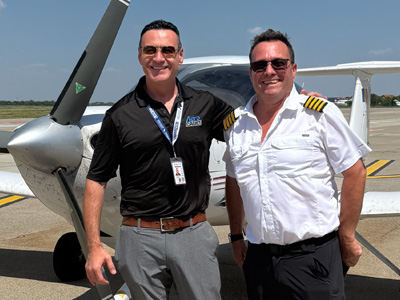
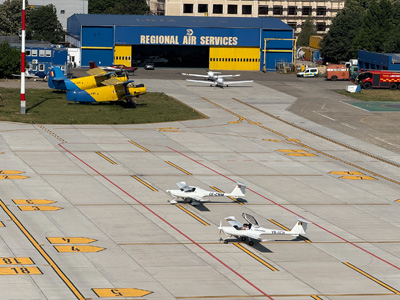
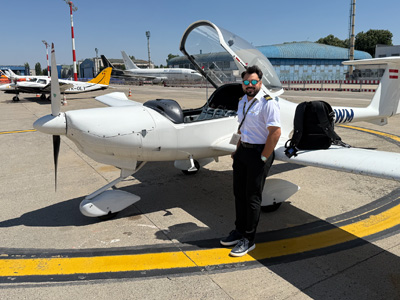
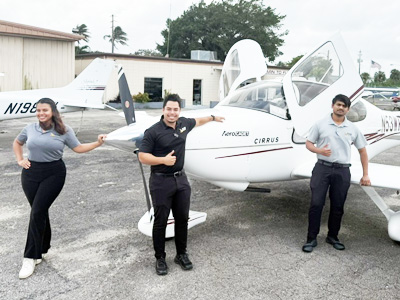
Regional Air Services - Aerocadet's FTP and close partner for EASA licensing - has training facilities in Tuzla Airport offer unprecedented accommodation and transportation flexibility to all international and non-EU students. Students enjoy low-cost South-European living on the shores of the beautiful Black Sea, taking this unique opportunity to submerge themselves into the local culture and Aviation life.
One of The Best Training Locations in Southern Europe!
Our main partner and contractor for EASA flight training and licensing in the European Union is Regional Air Services. Established in 1998, it was among the first private aviation operators in Romania. In 1999, the company expanded its operations by acquiring Tuzla Airport, making it the first privately owned airport in Romania. This strategic acquisition allowed full integration of airport operations with aviation services, significantly enhancing its training capabilities.
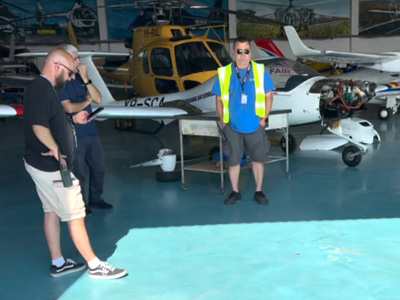
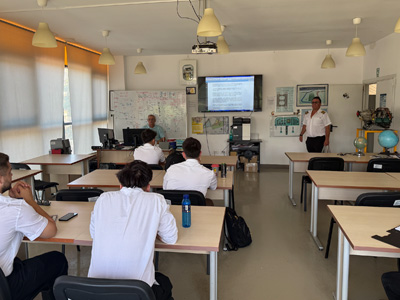
Tuzla Airport spans 36 hectares and includes two asphalt runways, four heliports, four asphalt taxiways, 32 concrete aircraft parking positions, and a 1,200 sqm hangar. The facility also comprises three administrative buildings—two original structures (A & B) and a newly constructed instructional center (C), which houses both a certified flight school and a sea survival training center. This airport is under complete operational control of Regional Air Services, meaning all flight training is conducted with minimal interference from commercial traffic or other flight schools. This exclusive use of the airfield greatly reduces aircraft idling time on the ground, minimizes delays, and provides students with maximum training value during each sortie, leading to more efficient flight hour utilization and faster progression.
Located on Romania’s scenic Black Sea coast, Tuzla is one of Southern Europe's most relaxed and attractive tourist destinations. With its warm, Mediterranean climate and minimal weather disruptions, flight training is possible year-round, allowing cadets to advance rapidly—many earning their PPL in as little as 6–8 weeks, and completing the entire Zero to EASA ATPL and Flight Instructor curriculum in only 18 months.
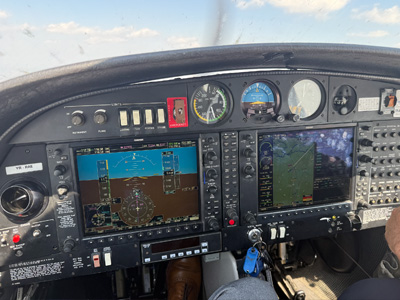
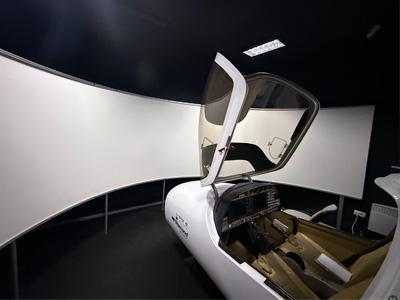
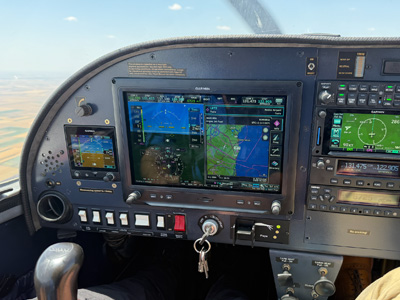
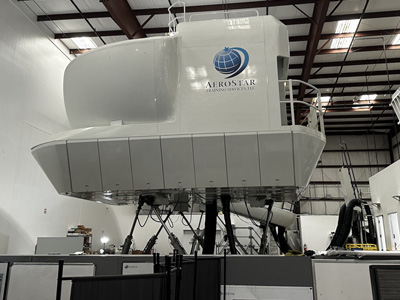
Students train with access to advanced resources, including a Diamond DA-40 ground training simulator for IFR rating, a fire training simulator for emergency and self-rescue drills, an FNPT II flight simulator, and a dedicated 200,000-liter fuel storage facility, with additional capacity under construction. Support infrastructure such as car parking, annexes, and ample aircraft parking positions further enhances operational readiness.
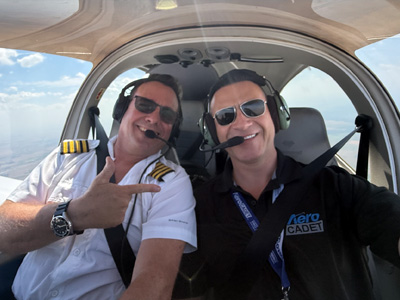
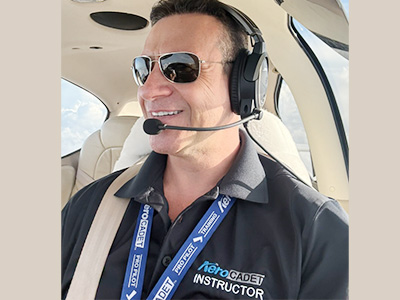
In addition, Aerocadet’s leading aviation career mentors regularly visit the Tuzla training center, offering cadets personalized mentorship, career guidance, and industry insight throughout the training program. This hands-on mentorship ensures that every student receives not only top-quality technical instruction but also a strategic career pathway aligned with current airline hiring trends.
Regional Air Services, when integrated with Aerocadet's fully comprehensive flight training and internship programs, offers unprecedented value for money: student are able to achieve restricted EASA/ICAO ATPL (Frozen) and FI license, with the guaranteed propeller hour-building employment. Additional pathway are available for employment placement for Gulf airlines, such as flyDubai, Emirates and Qatar, as well as unrestricted dual-license ATPL pathway with Airbus 320 hour-building.
Amazing Hour-building Cross-country Training!
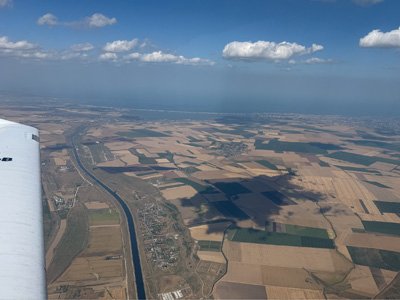
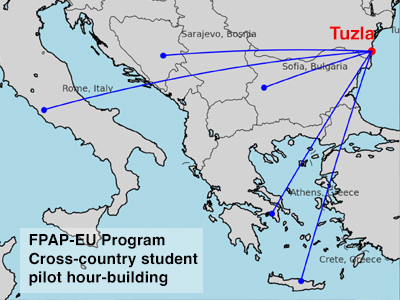
Unlike most other flight training facilities in the European Union, our Flight Training Program in Tuzla offers students the unique opportunity to conduct their hour-building phase through multi-aircraft, multi-pilot cross-country flightsacross numerous Schengen zone countries. Leveraging Tuzla's strategic location and unrestricted general aviation access, students can plan and execute extended cross-border flights to destinations such as Greece, Crete, Bulgaria, Austria, and even Italy. These coordinated flights—often conducted in small groups flying in multiple aircraft—enhance navigation skills, operational planning, and real-world flying experience over diverse airspace and terrain. This unparalleled flexibility not only makes hour-building more dynamic and engaging but also mirrors the complexity of airline operations, giving students a competitive edge in their future aviation careers.
This is not just a highly effective and enjoyable way to build your flight time during training—it’s also an unforgettable flying experience that will stay with you for the rest of your aviation career. Flying across multiple countries with fellow cadets, navigating international airspace, and landing at airports in Greece, Austria, Crete, or Italy creates a level of adventure and professional exposure that most students at other flight schools can only dream of. It transforms the hour-building phase into a formative and inspiring journey, combining advanced skill development with the thrill of real-world international flying.
Student Accommodation and Student Life
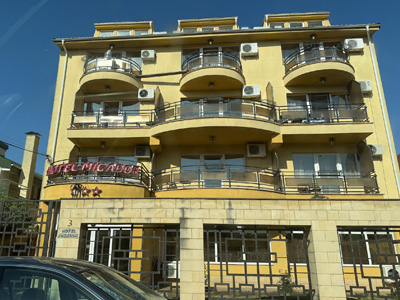
Currently, the long-stay student campus is served by a local tourist hotel, called "Hotel Migador" located on the picturesque shore of the Black Sea, in a vibrant tourist area renowned for its stunning coastal views and relaxed atmosphere.
This location not only provides an inspiring setting for flight training but also offers one of the lowest costs of living in the European Union, making it an ideal and cost-effective destination for aspiring pilots. Students are accommodated in a dedicated student hotel, designed to replicate the western-style campus experience, where two pilots typically share a comfortable, fully-furnished room.
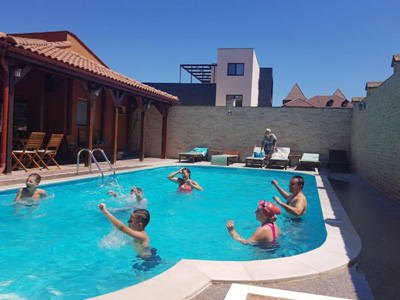
Accommodation is not included in the cost of the FPAP-EU program. The hotel offers direct access to the beach, allowing pilots to unwind and recharge after intensive training sessions. Additionally, it boasts state-of-the-art fitness facilities, a swimming pool, a well-stocked bar, and multiple relaxation areas, creating a perfect balance between professional training and a fulfilling student lifestyle. This unique coastal location not only enhances the overall student experience but also provides a highly motivating environment for future airline pilots, combining top-tier flight training with an exceptional quality of life.
In addition to the standard accommodation options currently available, Regional Air Services is actively developing its own on-airport campus housing for students who prefer to live close to the flight training center. This purpose-built accommodation will offer convenience, security, and direct access to the training facilities, enhancing the overall learning experience. The on-campus housing is expected to be available by the end of 2026.
For students who prefer more independence, private accommodation in the town of Tuzla is also readily available. Fully furnished one- or two-bedroom apartments can be rented for as low as $500 per month, offering a cost-effective and comfortable alternative to campus housing. Whether students choose to stay on-site or in town, Tuzla provides a relaxed and affordable living environment ideal for focused flight training.
Part-time employment
Non-EU students in Romania can work part-time while they study. Romanian law, as updated in 2024, allows foreign nationals who hold a temporary residence permit for studies to work part-time without a separate work permit, up to a maximum of 6 hours per day on a part-time contract.
How many hours can a non-EU student work?
Romania has aligned its rules with EU law on students, but the details are defined nationally:
-
The EU Immigration Portal for Romania states that students may work part-time during studies, historically up to 4 hours per day without a work authorization. Migration and Home Affairs
-
A 2024 legal update increased this ceiling to 6 hours per day for non-EU students who hold temporary residence for studies and are employed on a part-time contract, still without a work permit. KPMG+1
Many guides still paraphrase this as “up to 20 hours per week,” and some also mention the possibility of full-time work during official university holidays, especially in sectors like IT, hospitality and customer service. EU Study+1
To stay on the safe side, students should assume:
-
During the academic period:
– work part-time only;
– no more than 6 hours per day across all employers;
– your total hours must not turn your job into a de-facto full-time role.
-
During holidays:
– some employers and universities treat holidays more flexibly (near full-time);
– but you must still respect the legal framework and your specific permit conditions.
Do students need a work permit?
This is where Romania is relatively generous to bona-fide students:
That means:
-
If you are a non-EU student with a valid residence permit for studies, your employer does NOT need to apply for a work authorization (aviz de angajare) for a limited part-time job.
-
If you want to work more than the permitted hours, or if your situation falls outside the “studies” category, then the employer generally must obtain a work authorization and you may need to change your residence purpose to “work.”
Please refer to Migration and Home Affairs for more information.